
This paper below is a translation of a paper originally published in Korean. The translated content may differ from the actual content of the paper or the author’s intent. Therefore, if you wish to cite this paper, please refer to the original text of the publication.
Journal of the Korea Contents Association, 23(2) (2023), 647-656
- Lee Yong-Seol: Associate Professor, Department of Digital Contents, Dongseo University
- Song Seung-Keun: Professor, Department of Digital Contents, Dongseo University
- Choi Hun: Assistant Professor, Department of Business Information, Catholic University of Busan
Abstract
With the entry of a super-aged society, convergence of IT technology for senior health care and the health care industry, smart health care is rapidly emerging as a solution to the problem of the elderly living alone in the aging era. The development of non-face-to-face care services using AI is a global trend, not just a few countries, and the form of care services for the elderly using AI artificial intelligence technology is rapidly changing. Korea is also on the verge of entering a super-aging society, and as the number of single-person households increases, the problem of a lack of elderly welfare workers in relation to caring for the elderly living alone is emerging as a social issue. Elderly care services using IT technology, such as artificial intelligence elderly care robots, IOT and mobile carriers’ elderly care services, fall accident prevention system, medication management system, home care support service, and fire prevention through life data analysis, are not only convenient, but also In addition, it is presented as a vision that will solve long-term social problems such as the labor shortage of care workers for the elderly. Therefore, I would like to present cases related to the elderly care service for the elderly and suggest the development direction of the elderly care service as a countermeasure in the era of super-aging.
I. Introduction
As the global COVID-19 prolongation and population aging phenomenon have faced the limitations of the existing face-to-face elderly care service system, non-face-to-face elderly care services through various IT and artificial intelligence technologies have received attention around the world. Senior healthcare, which combines the medical industry with IT technologies such as the Internet of Things (IOT), AI, and sensors, is rapidly replacing existing care services, and many domestic and overseas startup markets are showing much interest in the silver business.
While the world is rapidly aging, Korea is experiencing the highest aging rate and is expected to enter a super-aged society by 2025. The reasons for the acceleration of population aging in society include increased life expectancy due to the baby boomer generation and technological advancements, and a gradually decreasing birth rate [1].
The increase in the elderly population due to the aging phenomenon is a serious issue from economic and social perspectives. In Korea, which is becoming one of the world’s fastest aging societies, it is predicted that the proportion of the population aged 65 or older will increase from 14.9% as of 2019 to 46.5% in 2067, about half a century later. (Statistics Korea, September 2019, “Population Status and Prospects in the World and Korea”) As the working-age population decreases in line with the low birth rate, the number of elderly people to support per 100 working-age people aged 15 to 64 will drop from 18.8 in 2017 to 50 years from now. It will increase explosively by more than five times to 102.4 in 2067. (Statistics Korea March 2019, “Special Estimate of Future Population: 2017-2067”) As the elderly population increases, the number of people with chronic diseases and the elderly living alone will likely increase significantly, resulting in serious problems such as decreased productivity.
Despite the government’s measures to address the increasing demand for elderly care, economic and social issues resulting from an aging society remain. Among the various problems of aging, the most important problem is the increase in employment and medical expenses. As the senior healthcare market develops, the problems mentioned above are expected to be resolved.
II. Theoretical background and related studies
Elderly care refers to the support and management provided socially to individuals in the elderly population. The Ministry of Health and Welfare defines comprehensive elderly care services as services aimed at ensuring a stable post-retirement life and creating a socio-economic base for families, by providing tailored welfare services such as safety checks, life education, service linkage, household support, and activity assistance to elderly individuals who find it difficult to carry out their daily lives independently[2]. Care encompasses activities supporting the overall life of individuals who find it challenging to live independently and is considered a vital social service for the reproduction and maintenance of societal members.
Care labor extends beyond physical and bodily work to encompass emotional, psychological, and even ethical dimensions, occurring within the emotional relationship between the caregiver and the recipient. Thus, although it constitutes labor, care work holds value beyond mere labor force, transcending into a ‘care relationship’ that needs to be defined. While it’s a form of labor, caregiving, unlike most other types of labor, can’t be replaced by AI or machinery and should be recognized as a relationship involving emotional connections and ethical considerations.
The importance of ‘relationship’ within caregiving implies an emotionally reliant connection between the provider and recipient of care. The relationship between elderly caregivers and recipients should strive for a positive connection, depicting more than just a caregiver but also someone akin to a trusted companion or even a grandchild, highlighting the orientation that elderly care services should pursue[3].
Elderly care encompasses a multidimensional approach, meaning intensive management and support – physical, psychological, social, and emotional – for elderly individuals who are entering old age and find it challenging to care for themselves or carry out their daily activities.
Therefore, elderly care services fundamentally aim to provide tailored welfare for elderly individuals living alone or those who find it difficult to lead an independent daily life. These services include safety and health checks through visits, life education, various convenience service linkages, support for families dealing with dementia, and household activity assistance.
Elderly care services are considered complementary services beyond the scope of long-term care insurance, designed to support stable post-retirement lives of recipients.
Visitation services provided by elderly caregivers encompass activities such as assisting with personal care, daily activities, household chores, meal preparation, cleaning, laundry, and other necessary tasks[4].
Elderly care services are categorized based on service locations into facility protection services including nursing home protection services and care facility protection services, and home protection services such as long-term care insurance, home-based elderly welfare services, and elderly care services[5].
Traditional elderly care, once primarily within the realm of family activities, has transitioned into a specialized and expanded form of care provided by non-governmental organizations and the state, due to significant changes in family structures and the severity of the aging population.
In South Korea, rapid aging since the 2000s has led to a shortage of manpower for elderly care due to various societal changes like the increase in the elderly population needing care, low birth rates, the rise in single-person households, shifts in values related to Confucian ethics among modern individuals, and increased participation of women in economic activities, who traditionally managed household care labor, among other factors[6].
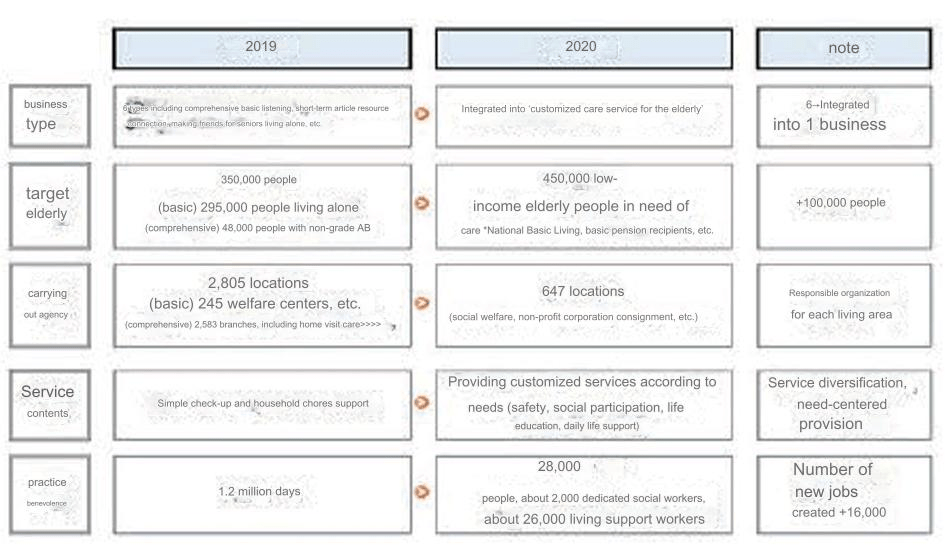
Hence, the government has integrated and restructured existing elderly care programs into ‘Elderly Customized Care Services,’ formulating policies such as ‘Basic Elderly Care Services,’ ‘Comprehensive Elderly Care Services,’ ‘Short-Term Household Services,’ ‘Initial Independent Support for Elderly Living Alone,’ ‘Social Activation for Elderly Living Alone,’ and ‘Community Resource Coordination’ to support these customized services.
To overcome these challenges, there’s a growing voice at the national, governmental, and community levels advocating for the expansion and strengthening of elderly care services, leading to the societalization of care services, marked by the significant increase in socialized care labor through various policies and institutional changes[7].
III. Elderly care service example
1. AI Elderly Care Robot
1.1 Korea’s AI Elderly Care Robot ‘Bomi’
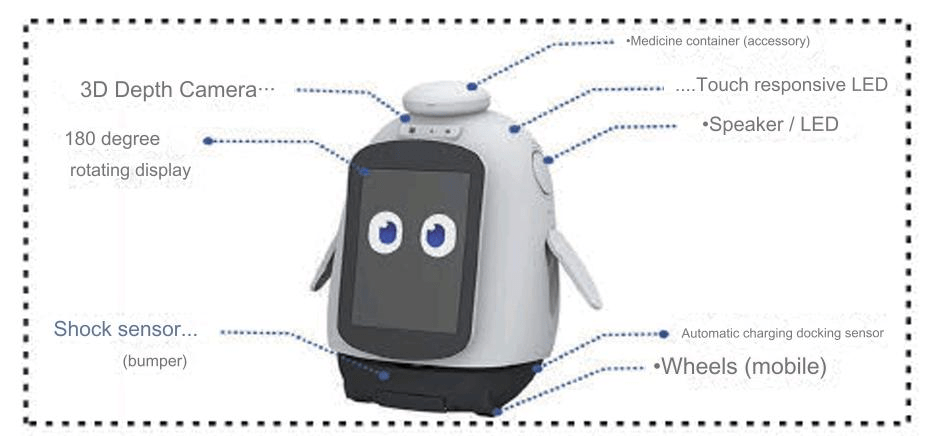
With face-to-face elderly care becoming challenging due to COVID-19 among the elderly, globally, AI technology has been integrated to develop and utilize elderly care robots for health management. The Bomi I and II robots, released by the Gyeonggi Province Regional Collaboration Research Center in the last two years, provide cognitive training care services for brain function enhancement. They function as autonomous mobile robots capable of emergency alert services and medication reminders.
The services to be implemented this year involve AI robots capable of emotional interaction through conversations with the elderly or elderly individuals living alone, allowing for the management of users’ mental health conditions such as depression. They’ve constructed a learning database comprising over 13,500 responses categorized into positive, neutral, and negative data, derived from around 30 question-based conversational items based on the Geriatric Depression Scale (GDS). This database includes an additional 36,000 sentences for further conversation. All sentences are categorized into eight emotions—related to health, interpersonal relationships, joy, sadness, and other topics of interest to the elderly—allowing for the identification of the user’s emotions and topics discussed, facilitating appropriate responses to manage the emotional well-being of the elderly.
1.2 Smart Toy Robot ‘Hyodol’
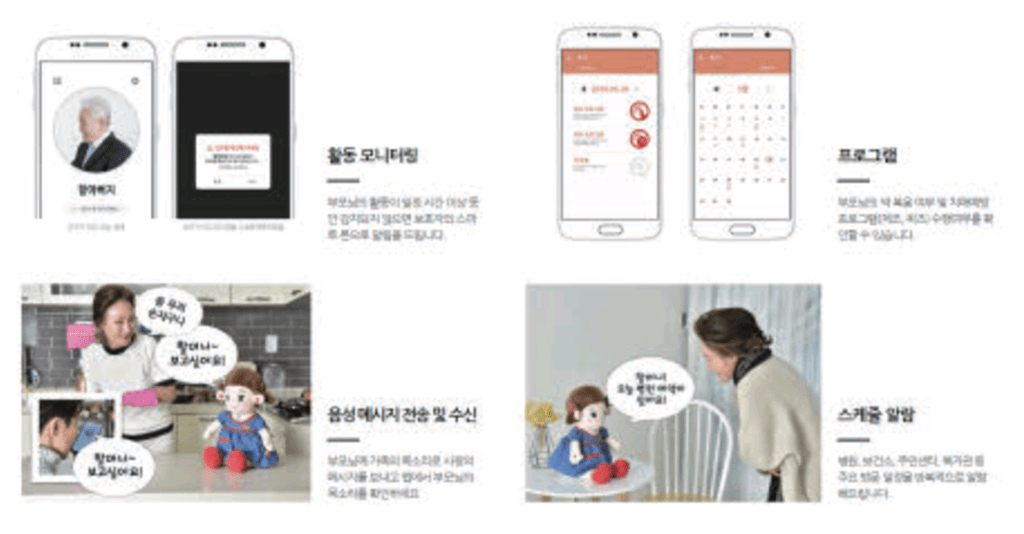
The smart toy robot, Hyodol, takes the form of a doll, resembling a grandchild to the elderly, providing familiarity and warmth through its similar appearance and voice. Users can also interact by stroking the robot’s head or holding its hand, receiving feedback in return. For the elderly’s caregivers, the application function allows them to confirm medication intake and the elderly’s meal status. Additionally, it offers the feature to notify caregivers if no movement is detected within a specific period.
Through the ‘Parent’s Love Hyodol’ smartphone application designed for caregivers, they can install and register medication schedules and daily tasks, setting up alarms as needed. Using the registered times in the application, Hyodol directly communicates verbally with the parents (elderly). Users can also review daily and monthly statistics regarding proper medication intake.
Since 2017, through collaboration with local governments, the Hyodol robot has been distributed to households, including single elderly individuals and other elderly populations. In 2019, as part of the Ministry of Trade, Industry, and Energy-affiliated Korea Institute for Robot Industry Advancement’s ‘Support Project for Socially Vulnerable through Robot Utilization,’ in collaboration with Gwangyang City, plans were made to distribute Hyodol to 300 single elderly households residing in Gwangyang City.
The research team from the Medical School at Kangwon National University investigated changes in depression among 42 elderly individuals over a 6-month period, using the Hyodol robot. The results showed a decrease in the depression severity index, which decreased from an average of 5.76 points before usage to 4.69 points after usage. Particularly, the percentage of high-risk individuals for depression, who were prone to extreme choices and potential dementia symptoms, decreased from 19% to 14.3%.
1.3 AI Humanoid Robot – Pepper
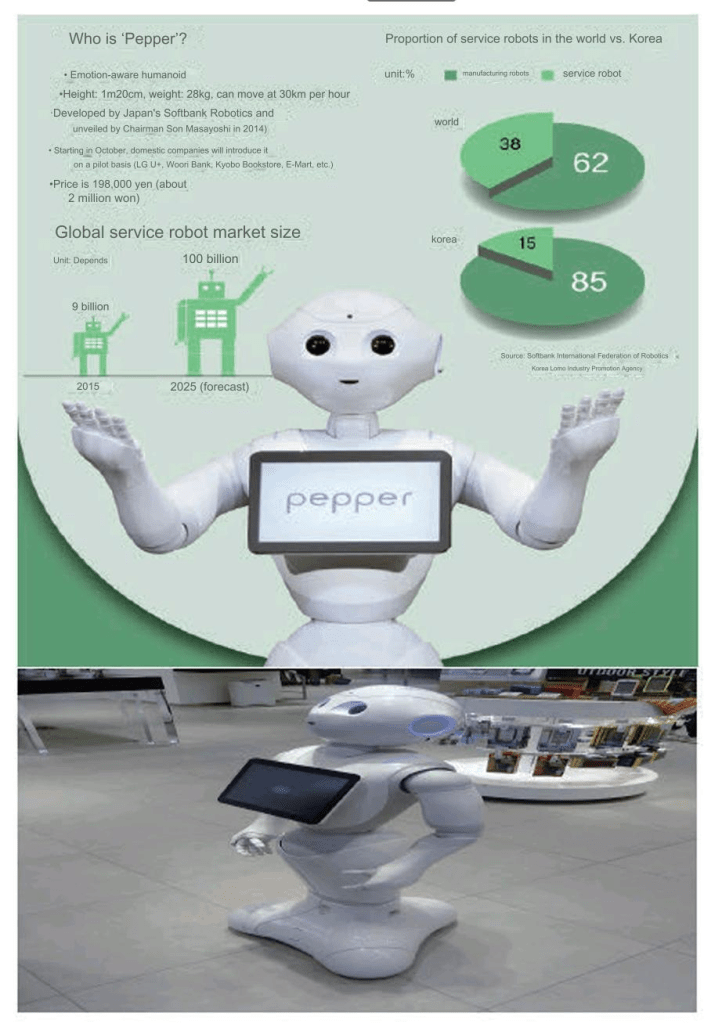
SoftBank’s service robot, Pepper, is a humanoid robot capable of recognizing emotions, developed by French company Aldebaran Robotics and SoftBank Mobile, and unveiled on June 5, 2014.
This robot stands at a typical height of 120cm (approximately for lower grades in elementary school) and weighs 29kg. Upon its release in 2014, it garnered considerable attention due to its ability to engage in emotional and empathetic interactions with humans, surpassing other robots by resembling human language and movements. It received recognition for its advanced features and found applications not only in various sectors like finance, retail, and services but also in services like reception, tourism guidance, nursing, medical services, and education. SoftBank continues to progress its upgrades, further enhancing the robot’s intelligence based on data analysis from AI platforms like IBM’s ‘Watson’ and cloud services like ‘Azure.’
Japan, the first nation to enter a super-aged society, has been strengthening its position as a leading nation in robotics, starting with the development of life support robots. Pepper has been introduced as a care robot in approximately 500 nursing homes in Japan. It performs simple conversations, assists in regular elderly exercises, and even engages in recreational activities like games.
According to the Ministry of Health, Labour, and Welfare in Japan, as of 2013, 15% of the population aged 65 and above were suffering from dementia. Japan is focusing on leveraging the Pepper robot to prevent dementia among its aging population.
Pepper is capable of autonomous movement and can communicate appropriately by analyzing human facial expressions and voice tones. It can also exercise to music and engage in light games like ‘Rock, Paper, Scissors,’ promoting brain usage among dementia patients and the elderly. Stimulating cognitive functions among the elderly could potentially aid in preventing dementia.
Recently, Ever, a US startup researching facial recognition technology, announced a partnership related to the introduction of facial authentication and recognition platform ‘Ever AI.’ The ongoing service enhancement involves incorporating Ever AI into Pepper, enabling tailored activities that aptly respond to users’ emotions through improved insight and analytical capabilities.
Currently, Pepper is conducting health checks in the lobby of the Dokusukai Hospital and has been placed in the main lobby of the Gil Hospital at Gachon University and an AI Cancer Center. Its deployment in areas that are inaccessible to the general public, such as sterile rooms and intensive care units, demonstrates the potential to construct advanced AI hospitals[8].
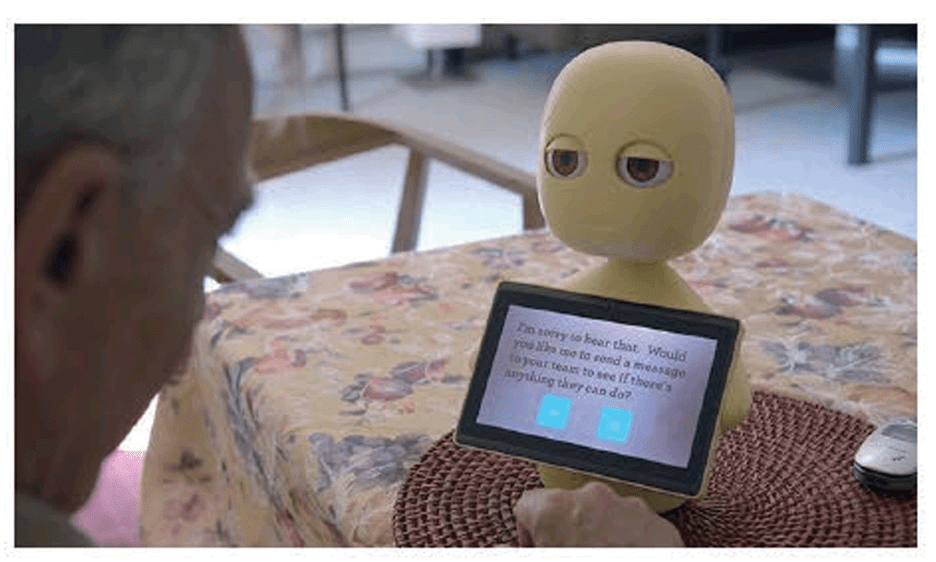
1.4 Home Healthcare Robot – Mabu
Mabu, developed by Catalia Health in the United States, is a home AI robot designed to assist chronic disease patients in managing their health conditions independently at home. Through conversations with the patient, Mabu prompts medication intake times and provides essential health information necessary for disease management. In cases where the patient’s mood turns negative after medication, it identifies potential causes of various depressions and offers coping strategies.
Moreover, it incorporates a system that transmits relevant patient data to medical professionals such as doctors, nurses, and pharmacists. Healthcare companies and pharmaceutical firms utilize this system to assess real-time treatment effects on patients, enabling a more detailed analysis and understanding of patient medication experiences. Around September 2019, a pilot program commenced with Pfizer, a pharmaceutical company, to evaluate the interaction between artificial intelligence and patients for a year.
2. IoT and Elderly Care Functions of Mobile Carriers
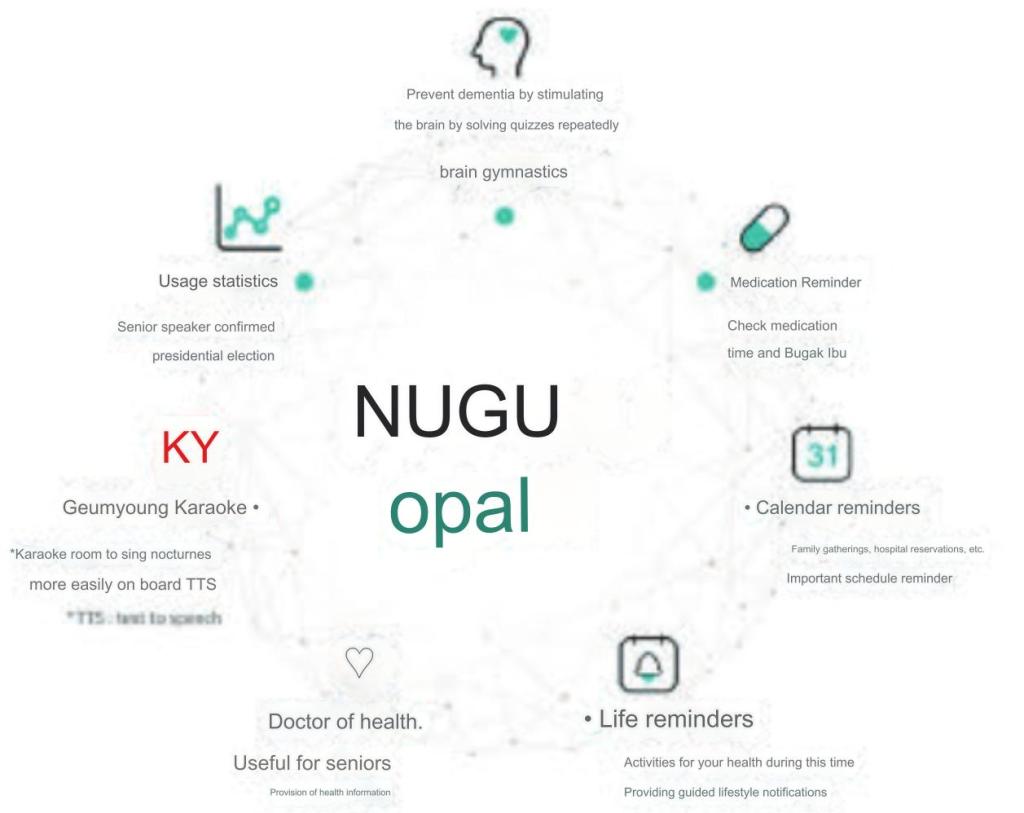
2.1 SK NUGU opal
SK’s NUGU opal Care Service is a 24/7 monitoring care service for the elderly using artificial intelligence technology. NUGU opal Care users can use voice commands to make an emergency call by saying keywords such as “save me,” “help me,” or “rescue me” in an emergency situation. In addition to the monitoring care and emergency call functions, the service also provides functions such as brain exercises, medication reminders, exercise reminders, and healing exercises. When a user’s emergency report is called, it is received 24 hours a day by the ADT Caps control center. The control center attempts to make a phone call to the reporting customer and then requests a rescue from 119 or the police station, protecting the health of the elderly anytime, anywhere.
2.2 KT GiGA Genie
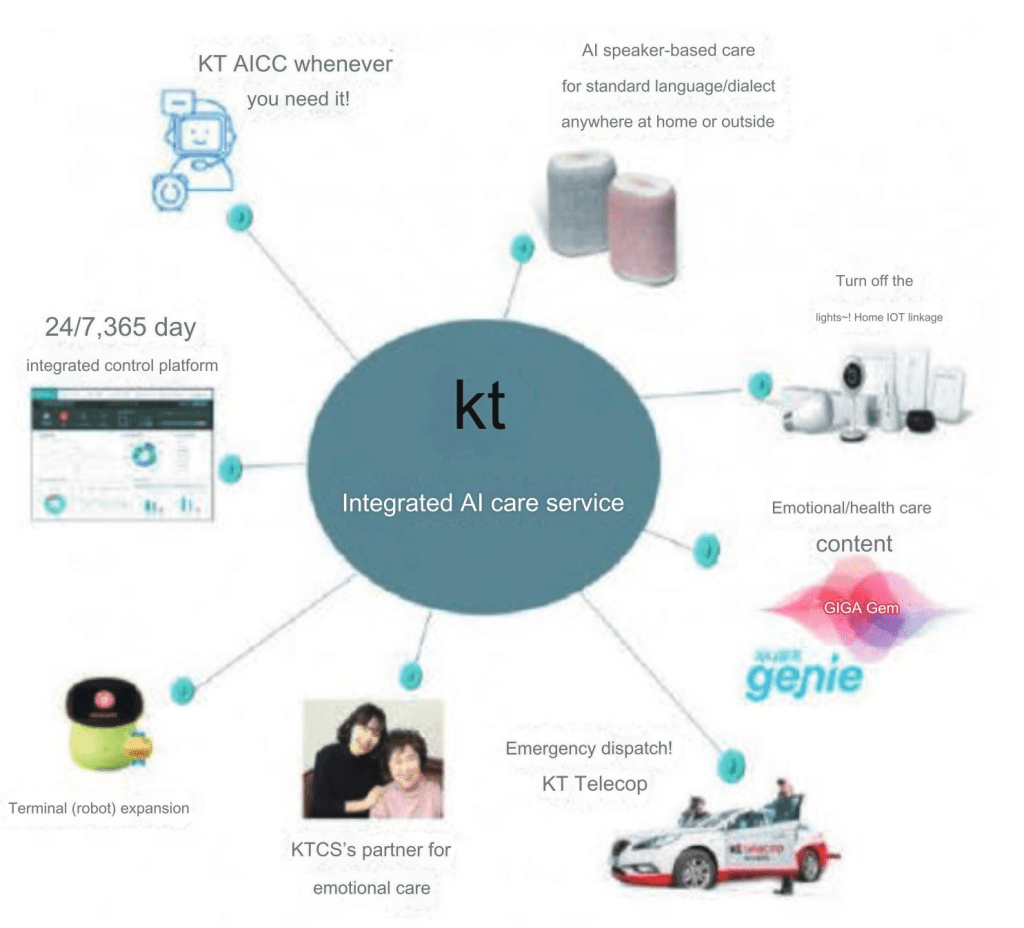
KT’s GiGA Genie is a senior care service that combines AI, big data, and cloud-based digital platforms. The goal of the service is to improve the quality of life for the elderly by shifting the focus from labor-intensive care services to digital platforms using IT technology. GiGA Genie is a mobile AI care service that can be provided even in homes without a wired internet connection.
When a user of the service, an elderly person, shouts “Genie, save me” in an emergency situation, they can be rescued 24 hours a day through the KT Telechope and 119 rescue team service system. GiGA Genie also provides services for the elderly, such as medication reminders, games and health management to prevent cognitive impairment, AI conversation, GiGA Genie music streaming, and conversation with KT CS professional counselors to relieve loneliness.
During the conversation function provided as a care service, if the keywords in the conversation are negative, the elderly’s depression is prevented by care through a counselor. The safety management function is also strengthened by connecting AI and Internet of Things (IoT) sensors through various notification functions and conversation functions.
In addition, KT GiGA Genie AI Care Service has helped in actual rescues with its emergency notification function of the 119 linkage system. In December last year, an emergency call was made to a GiGA Genie terminal device in the case of a bleeding emergency accident of an elderly person in Busan Dongnae-gu, and in March of the same year, in an emergency situation that occurred in Gwangju and Naju, South Jeolla Province, the elderly were rescued quickly due to the regional welfare team or the KT Telechope and 119 linkage response system.[9]
2.3 LG Marlang Marlang Haengbok Care
In October 2020, LG Uplus signed a business agreement with Hancom With, which operates the senior care service center “Marlang Marlang Haengbok Care,” and LG Electronics.
The “Marlang Marlang Haengbok Care” service provides cognitive training VR for dementia prevention developed in collaboration with a specialist, and an AI robot program that can interact with users. It also implements smart healthcare functions such as health status check in wearable form and user location confirmation function. It plans to jointly develop “senior-only content” based on virtual reality and augmented reality, and also develop a health care service business based on life log data of the elderly.
In addition, LG Uplus agreed to strengthen the social activity capabilities and care system of the elderly using ICT technology and to review the introduction of AI robots in the future.
The collaboration between LG Uplus, Hancom With, and LG Electronics is a significant step in the development of innovative senior care services in Korea. By combining the strengths of each company, the service is expected to provide a more comprehensive and effective care solution for the elderly.
The service’s cognitive training VR is designed to help prevent dementia by stimulating the brain. The AI robot program can provide companionship and support for the elderly, and it can also be used to deliver healthcare services. The smart healthcare functions can help to monitor the health of the elderly and provide assistance in case of an emergency.
The collaboration also aims to develop “senior-only content” that is tailored to the needs of the elderly. This content could include educational programs, entertainment, and social activities. The service is also expected to develop a health care service business based on life log data of the elderly. This data could be used to track the health and well-being of the elderly and to identify potential risks.
The “Marlang Marlang Haengbok Care” service is a promising example of how ICT can be used to improve the lives of the elderly. The collaboration between LG Uplus, Hancom With, and LG Electronics is a valuable step in the development of this innovative service.
3. Fall accident prevention system
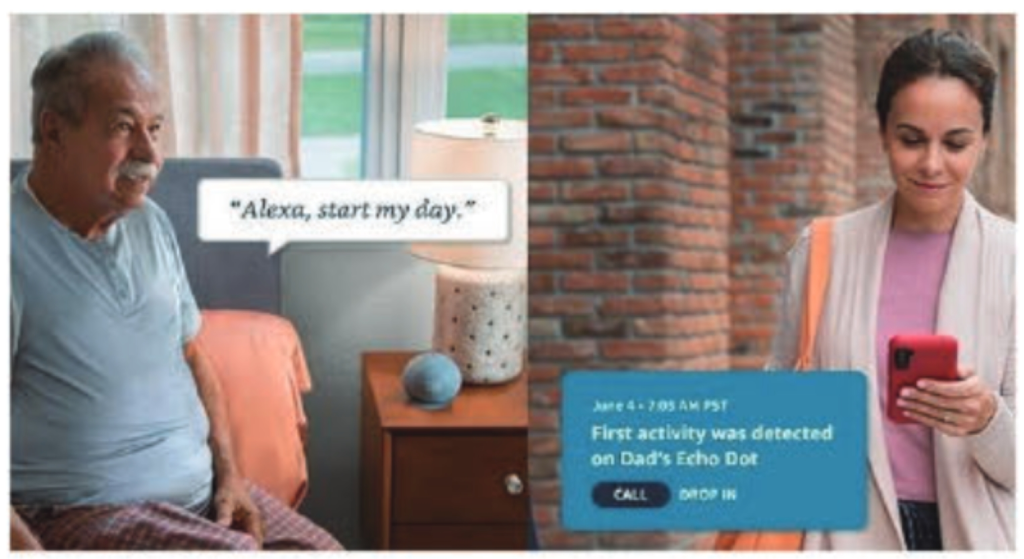
3.1 Amazon’s Remote AI System “Amazon Alexa Together”
Falls are a serious risk for the elderly, who may not be able to fully control their bodies. In fact, more than a third of seniors over the age of 65 in the United States experience a fall at least once a year. In South Korea, 21% of seniors over the age of 65 have experienced a fall (according to the Disease Control and Prevention’s statistics on falls). The risk of death and injury from falls is even greater for the elderly.
Amazon Alexa Together is a service that provides additional features to the existing Amazon Care service. Families can use the remote assist feature to manage various settings and add necessary notifications on behalf of elderly people who are physically uncomfortable or not familiar with the devices.
“Vayyar Care” is a wall-mounted sensor function that can detect falls in the elderly, and “Sky Angel care by ATS” is a pendant that detects whether the elderly customer is wearing it around their neck. Both functions can detect falls.
When the Vayyar Care device detects a risk of a fall in the elderly, a signal is sent to Alexa, allowing the user to respond to whether they want to be connected to an emergency consultation phone call that is available through Amazon Alexa Together. An alert is also sent to the family (guardian) or caregiver of the elderly user.
The traditional sensor function, which is a wall-mounted non-contact sensor, was dependent on wearable devices such as directly pressing a button or pulling a cord. However, Amazon has overcome the limitations of older fall alarm devices.
Amazon uses point cloud video technology that continuously monitors the surroundings while respecting the user’s privacy. Vayyar Care can detect falls in any lighting condition, including darkness or thick steam. The 4D video radar-based sensors immediately detect falls and send an emergency call to the caregiver family or caregiver, thereby preventing accidents and protecting them.
In addition, the activity feed function provides alerts to family members when the elderly have no activity or delayed activity, which reassures the elderly care family.
3.2 Qventus in the United States
Qventus in the United States provides a solution that uses AI technology to identify patients at high risk of falls. In order to respond to the possibility of a fall accident, the Qventus AI solution provides a function to identify patients at high risk of falls. To identify patients with a high risk of accidents, Qventus collects real-time data from electronic medical records, as well as nurse call, bed alarms, types of medications being administered, and vital sign records. It then analyzes this data to identify patients with a high risk of falling within 12 hours and sends an alert to the nursing center.
In fact, El Camino Hospital in California reported that the number of falls decreased by 29% after the introduction of this fall prevention system service
4. Medication management service
4.1 AiCure
AiCure is a company that provides a medication adherence management service using AI technology platform. The service provides a medication reminder function when it is time to take the prescribed medication through the smartphone application, and uses the camera to take a picture of the user’s medication intake. AI compares the captured person’s image to verify that the administered medication is the same as the prescription and shares the related data with the medical institution.
Medical institutions can check the patient’s intake status in real time, and it is also useful in cases where it is important to confirm the patient’s intake, such as in clinical trials.
4.2 Care Angel, the first AI-based elderly care service in the United States
In 2016, the United States began commercializing a service that provides medication reminders and health care services to elderly people living alone. Care Angel is the world’s first company to incorporate AI technology into elderly care. The service asks elderly people about their health status and medication intake, and periodically sends the user’s voice responses to the patient’s caregiver or family’s smartphone, using it as a healthcare monitoring function. Care Angel’s AI analyzes the elderly person’s response messages and sends an emergency alert to the family or doctor if the situation is considered dangerous or requires attention. This service provides immediate telephone connection service for a visit to the attending physician or virtual medical consultation.
5. Home Care Support Services
5.1 Honor
In the United States, where the demand for home care is high, on-demand services that provide a variety of services such as care, household assistance, and transportation while staying at home are active. Honor service uses AI to improve the quality of caregiver mediation services while also increasing the efficiency of operating and managing the elderly care system.
Not only in the United States, but also in Korea, the trend of providing home-based care services is increasing rather than traditional care services through facilities. Home-based services are becoming active where the elderly continue to live in their original homes while also receiving care services.
In the past, there were many services that provided caregivers, but there were still inconveniences in use due to minimum usage time and the hassle of managing service quality. However, Honor, which recognized the problems of existing care services, uses artificial intelligence to analyze service data and improve the efficiency of service provision, providing customized high-quality services. Honor uses algorithm technology to shorten the minimum usage time by allocating the system based on location or travel distance, and connects services by selecting caregivers that meet customer needs such as language, interests, and skills. In addition, by analyzing the data, it analyzes and reveals the factors that affect the service provision of caregivers, such as the user’s specific caregiver preference and feedback, to provide a more efficient service.
6. Preventing Incidents Based on Daily Life Data Analysis
6.1 U-Care
Operates an emergency safety care service for elderly individuals living alone, monitoring and managing their health and safety conditions 365 days a year to reduce safety blind spots. Aims to prevent elderly isolation and respond promptly and efficiently to any emergency situations that may arise. Using IT-based technology, monitors the movement and activity levels of the elderly and operates the U-Care system for 24/7 life monitoring. This system collects and analyzes sensing information within the homes of the elderly service recipients, enabling real-time safety checks and various history management for elderly individuals living alone in different cities, counties, and districts. Facilitates real-time coordination and ambulance dispatch with the fire department’s 119 service, sharing personal information such as the elderly person’s name and address and implementing joint history management functions for rescue and medical services. Through the installation of activity-detecting sensors and fire detection, it detects abnormal situations such as fires and gas leaks. Local U-Care centers conduct 365 days of life monitoring to check the safety status and history of the elderly population. In cases of fire-related incidents or gas leaks, the system is linked in real-time with the fire department’s U-119 service for immediate rescue and medical assistance, preemptively preventing and protecting the safety of elderly individuals living alone.
IV. Discussion and Research Limitations
Firstly, the development and activation of elderly care services require collaboration with the senior healthcare industry. To improve healthcare services, a substantial amount of user data and usage data is necessary[10]. Therefore, continuous feedback from elderly care recipients regarding their needs during the development phase can help mitigate potential issues that may arise post-development[11].
Secondly, a balance must be struck between elderly care services and ethical principles. As caregiving robots and AI services offer various functionalities, they inevitably face ethical challenges. For instance, the American company Amazon’s artificial intelligence technology raised ethical concerns when it became capable of replicating the voices of deceased family members with just a sample. This technology could potentially be misused for criminal activities or trigger trauma in other families. Thus, the ethical discussions surrounding caregiving, such as privacy infringements during data collection and utilization, as well as the reduction in human interaction due to caregiving robots, are essential.
In order to develop AI services that coexist with human values, a priority should be placed on human-centered values that prioritize both human dignity and convenience.
Thirdly, activate education initiatives to overcome the limitations of the digitally vulnerable population. For the advancement of elderly care services, providing education on healthcare service utilization is crucial. One of the major barriers to the introduction of senior healthcare is the digital divide. In 2021, the level of digitalization among the elderly was only 69.1%, marking the lowest level among the four major digitally vulnerable groups (people with disabilities, low-income individuals, farmers, and the elderly). Therefore, there is a need for education not only on the use of digital healthcare but also specifically focused on building digital literacy.
Adding educational features to existing elderly care services can help bridge the information gap and further activate the utilization of senior healthcare services. This is expected to address the digital divide and enhance the usage of senior healthcare services.
This study extensively examined various cases of using cutting-edge IT technologies to improve service quality and reduce costs in response to the increasing demand for elderly care services. However, specific data on the degree of quality improvement and costs should be gathered and analyzed in the future, based on the accumulated data over the course of service implementation. Subsequent research can investigate the quantitative effects brought about by the services introduced in the cases mentioned.
References:
[1] J. Y. Lee, “Research on the Revitalization of Senior Digital Healthcare Services,” Master’s Degree thesis, Kwangwoon University Graduate School of Smart Convergence, Seoul, 2022.
[2] 2012 Elderly Health and Welfare Program Information, Ministry of Health and Welfare, 2012.
[3] M. K. Han and C. W. Kim, “A study on the specification characteristics and values of care work for the elderly,” Korean Association of Social Policy, Vol. 26, No. 3, pp. 117-147, 2022.
[4] J. O. Lee, “Problems and Improvements to Korean Care Services for the Elderly,” Master’s degree thesis, Seoul City University, 2018.
[5] S. H. Lee, “Policy Suggestions for Improving Care Services for Older Koreans,” Health and welfare policy forum, Korea Institute for Health and Social Affairs, Vol. 214, pp. 54-65, 2014.
[6] J. H. Yun, “Characteristics of the Elderly Care Labor Market and Policy Tasks,” Labor Review, Korea Labor Institute, No. 96, pp. 31-44, 2013.
[7] J. K. Ryu, “A Qualitative Study on the Experience of Dietary Care of Life Support Professional for the Elderly,” Master’s Degree thesis, General Graduate School of Tea Medical University, 2021.
[8] Key Trends in S&T Global Science and Services Information Policy, Technology Vol. 168, 2020.
[9] Y. H. Chon and C. N. Kim, “A Study on Home Support Service for Older People in terms of Necessity and Establishment of Roles: Focusing on the Perspectives of the Service Users and Providers in Gyeonggi province,” Korean Journal of Gerontological Social Welfare, Vol. 71, No. 1, pp. 275-304, 2016.
[10] J. Y. Lee, “A Study on the Revitalization of Senior Digital Healthcare Services,” Master’s thesis in Korea, Kwangwoon University Graduate School of Smart Convergence, Seoul, pp. 45-53, 2022.
[11] S. H. Lee, S. Park, J. M. Park, B. S. Geum, S. J. Min, and Y. T. Cho, “A Study on the Digital Information Gap in 2021,” Ministry of Science and ICT, Korea Information Society Agency, pp. 19-25, 2022.
 Uthando Nethemba